

The Electoral Cycle
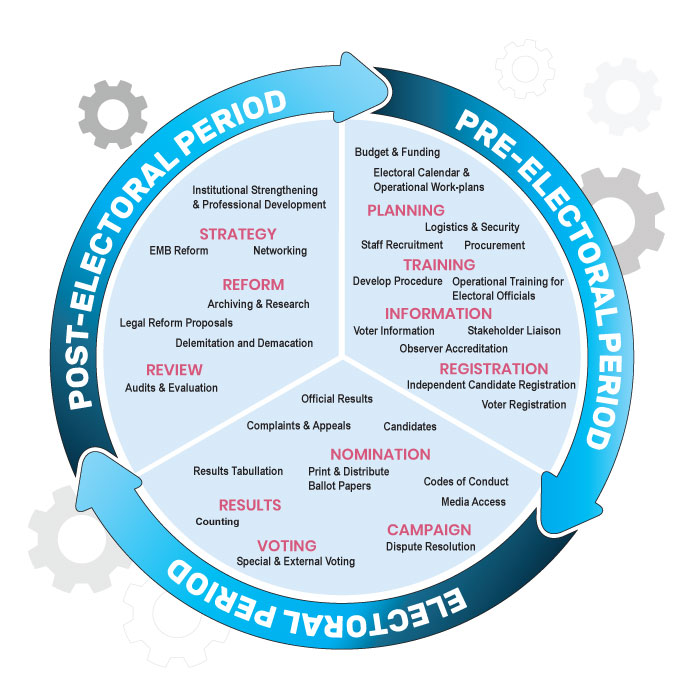
Just like any Electoral Management Body (EMB), the IEC works within an Electoral Cycle. The Electoral Cycle is a virtual planning tool used internationally in electoral management. General Elections in Botswana are held every five years following the first seating of the new Parliament in line with the provisions of the Constitution of Botswana. The fifth year expires in October of every election year.
The electoral cycle is divided into three(3) main phases. Each phase comprises specific activities.
- PRE-ELECTORAL PHASE - This is the longest phase lasting three (3) to four (4) years. It involves all preparatory work necessary to ensure a fair and organized election. It involves activities such as Delimitation of Constituency Boundaries; Establishment of Polling District and Polling Stations; Budget Preparation; Development of Election Calendar; Equipment/Material Procurement; Voter Registration; Independent Candidate Registration; and Stakeholder Consultation/Education.
- ELECTORAL PHASE – This is the shortest phase in the Electoral Cycle which lasts about 60 days from dissolution of Parliament to release of election result. It involves activities such as Candidate Nomination; Campaigns; Election Observation; Polling; Counting and announcement of results; and Stakeholder engagement.
- POST-ELECTORAL PHASE – This phase lasts a few months and it starts the preparations for the next general election. This phase focuses on evaluation and institutional reforms. It also involves activities such as processing of election petitions; Submission of Election Observer Reports; Law Reforms; and Development of strategy for the next Cycle.